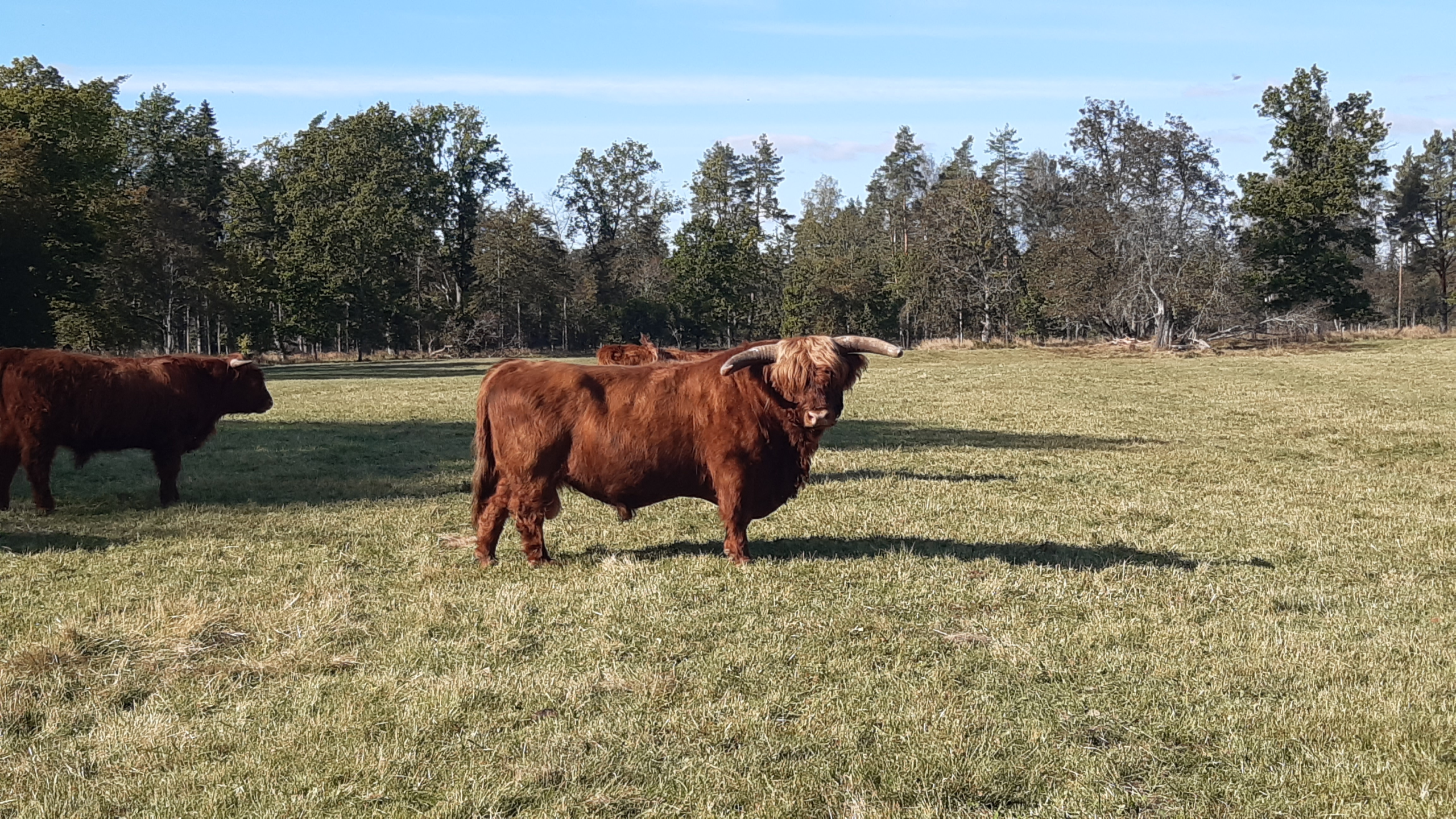
Bouncing through the wilderness of Tartu country, Estonia, in the back of a battered silver pickup, it’s easy to see the benefits of Airi’s rotational grazing on the ancient grasslands. It’s a bright, sunny morning in the small community of Sepa, about 250km southeast of Helsinki and 50km west of Lake Peipus on Russia’s western border.
It’s only late September, but the bitter, biting eastern chill is noticeable in the mornings. The cows blink slowly at us as we approach, blearily snorting and shuffling in the fresh morning sun. Later on, the meadows will come alive with a symphony of insects I’d never experienced in the UK – I don’t remember hearing a grasshopper for years. But for now, the world is still asleep, the cows sheltering between the young elder trees and shrubs from the frosty Estonian dawn.
The farm practices AMP rotational grazing during the summer and bale grazing in the winter; all feed is home-produced. Because the animals are moved on regularly, it reduces the pressure on the land and the problems associated with overgrazing, like desertification and compaction of the soil increasing flood risk. The trees and forage make up part of this system too; the roots helping to hold the soil together and young leaves providing a varied diet for the cows. It also helps shelter the animals during the harsh winters. These happy cows are 100% pasture-fed with some getting extra hay in winter: grass-fed beef contains as much as three times more omega-3 fatty acids, helping to fight depression and cancer risk, as well as providing 4-500% more CLA (conjugated linoleic acid), an essential nutrient associated with lowering heart disease and cancer risk, reducing body fat and maintaining lean muscle mass. It’s rich in vitamin A, vital for maintaining healthy skin and eyes, and contains four times as much vitamin E as grain-fed beef, an important part of a healthy immune system.
Puutsa farm is a member of the Liivimaa Lihaveis quality scheme and is one of the lighthouse farms in the OrganicClimateNet project. Airi Külvet is the founder of Liivimaa Lihaveis and leads its grass-fed beef quality scheme. She shares her expertise at information days, seminars, conferences, and in video
materials, and serves on several advisory boards and working groups.
Oxtail borscht (serves 6)
Borscht originates in Ukraine, but a variation of a slowly simmered soup made with the tougher and more affordable cuts of beef exists all over eastern Europe. This version, made with sauerkraut for the traditional tang, is my favourite, although feel free to use fresh cabbage if you’re pushed for time. During my time in the Baltics, I explored a Soviet research base working on categorizing apples, I watched the light slowly fade in another being’s eyes in an abattoir and stood under the aroura listening to the wolves howling, but this simple country soup is the experience I keep coming back to when I want something hot, cheap and nutritious for drizzly grey British winters and biting Baltic ones alike.
- 1tbsp olive oil
- 4 medium beetroot, scrubbed clean
- 300g oxtail or lamb neck, cut into thick steaks but left on the bone. You might have to ask your butcher to do this for you.
- 1 large carrot, diced
- 1 stick of celery or 1/2 a fennel bulb, diced – keep the fennel fronds or celery leaves for later.
- 1 onion, diced
- 1 large waxy potato, cut into 6-8 wedges
- 2 garlic cloves, minced
- 1.5l homemade veg stock or water
- 1/2 a green cabbage, shredded
- 1tbsp tomato puree
- Sea salt and plenty of black pepper
- Silken tofu with a squeeze of lemon and 1/2tsp minced garlic mixed in, to serve. The Estonians serve this soup with copious amounts of sour cream, but I also like Acayu cultured cashew cream for this. Creamy, vegan and luxurious, it’s fermented for a mild cheesy tang, then lifted with fragrant dill, garlic and olive oil. Well worth picking some up if you spot it.
- Chopped fennel fronds or celery leaves to finish the soup.
For the sauerkraut, wash and drain the cabbage well, and weigh it. Find 3% of this weight, then weigh out that amount of sea salt. Massage the salt into the shredded cabbage for about 5 minutes, until the leaves and starting to break down and release some of their water. Pack into a 500ml clean fermenting jar, top up with fresh water so that all the greens are submerged, and ferment in a dry place for 5-7 days, depending on the temperature of your kitchen. Feel free to add fresh cabbage in the last 10 minutes of cooking instead, but I love the anise-fragrant sourness. It takes longer, but it’s well worth a try. There’s a well-documented link between fermented foods, gut health and general wellbeing.
When the kraut is ready, heat a splash of olive oil or beef fat in a large, heavy based pot or Dutch oven over a medium high heat. Season the meat well with salt and brown on both sides until deeply golden-brown. Remove from the pan, then add the diced onion, carrot, celery or fennel and garlic with a splash of apple cider vinegar. Fry for a few minutes, scraping all the sticky goodness up from the bottom of the pan, then add a few springs of thyme or rosemary, if you like, and the tomato paste. Fry for another 1-2 minutes, then return the meat to the pan along with the potato and pour over the stock or water. Slowly bring to a simmer.
Meanwhile, preheat your oven to 160C. Place 3 of the beetroot directly on the oven racks to roast for about 45 minutes to an hour, depending on the size of your beetroot. Once the soup has come to a simmer, cover it with a lid and pop this in the oven to braise for about 3 hours, or until the meat is meltingly tender. After the 3 hours is up, grate the roasted beets and the one raw beet and add this to the pot along with the drained sauerkraut. Taste and correct the seasoning with more apple cider vinegar, salt and plenty of black pepper.
Serve hot, with plenty of sour cream or alternative of choice, chopped herbs, crusty rye bread and a drizzle of olive oil. If you’d rather leave the meat out, just simmer the onion, carrots, celery, garlic and potatoes for 30-35 minutes, or until the potatoes are tender. Add the grated beets and kraut at the end as before – I like the crunch of raw beetroot and cabbage, but you could simmer everything for another 10-15 minutes if you like.
Bavette steak stroganoff (serves 4 generously)
Bavette (also known as flank or skirt steak) is an incredible cut of beef that’s sadly overlooked by many. Overshadowed by the big-ticket cuts of fillet, rib-eye, sirloin and rump, bavette is often only available in butchers rather than supermarkets. However, it’s well worth seeking out – incredibly affordable and absolutely packed with flavour, it’s the cut I work with the most and one of my favourites.
Bavette is often best cooked over a seriously fierce heat and kept rare in the centre. It’s also the perfect medium for rubs and marinades, thanks to its deep, strong beefy flavour. I’ve adapted the classic Russian dish to use bavette rather than the much pricier and (in my professional opinion) less flavourful fillet, as well as the addition of king oyster mushrooms and protein-rich tofu in place of some of the meat. Mushrooms are cheap and versatile, and one of the only two plant-based sources of the vital vitamin B12, contributing to normal energy metabolism and reducing feelings of tiredness.
- 400g bavette steak, ideally Soil Association and Pasture for Life accredited
- 250g king oyster or chestnut mushrooms, sliced
- 1tbsp olive oil
- 1 large onion, sliced
- 1tbsp smoked paprika
- 2 garlic cloves, minced
- 300g silken tofu or hempfu
- Russian tarragon or chopped chives, to garnish
- Spelt spaghetti or tagliatelle, to serve
Season the steak generously with salt and pepper and rub with a drizzle of olive oil. Heat a large cast-iron skillet over high heat, and once it begins to smoke place the steak in the pan, gently laying it away from you. Leave to cook for 1-2 minutes on each side, then set aside to rest. Add the sliced mushrooms to the pan, and stir-fry until all their liquid has been released and evaporated. Turn the heat down to medium then add the onion and cook until soft and translucent, about 5 minutes. Add the paprika and garlic along with a generous pinch of salt and pepper. Add the tofu and allow to melt into a creamy, unctuous sauce. Finish with a squeeze of lemon juice and keep warm while you slice the steak. Cut the bavette into long strips running against the grain.
Toss the cooked pasta through the sauce and serve in warmed pasta bowls. Top with a few slices of the steak and finish with the chopped herbs.
Beef shin kavardak (serves 4-6)
This hearty Uzbeki stew is a godsend during the extreme cold stretches that can befall the otherwise temperate climate. Beneath beef shin’s tough, sinewy exterior lies an unthinkable amount of flavour. Slowly simmering it for the better part of an afternoon will help get you in touch with its good side.
Nose-to-tail eating and utilising under-appreciated cuts of meat is something I talk about a lot: it’s a more affordable way to support better farmed meat, it helps cut food waste and it helps farmers manage their livestock. You can’t produce a filet mignon or a nice prime rib without the rest of the cow!
- 2tbsp olive oil
- 450g beef shin, cut into 2-inch cubes
- 1 onion, thickly sliced
- 2 bell peppers, stem and seeds removed and saved for planting later, thickly sliced
- 3 carrots, diced
- 3 waxy potatoes, cut into thick wedges – go for waxy varieties like Charlotte rather than floury ones like King Edward, as these will absorb more liquid during stewing and turn to mush
- 2 garlic cloves, minced
- 1.5l best-quality beef stock, veg stock or water
- 1/2tbsp cumin seeds
- Fresh parsley, dill or tarragon, chopped – all of these herbs grow happily in window boxes or pots
Heat the oil over a medium-high heat in a large pot. Season the beef shin well and fry until it is browned all over, about 8-10 minutes, turning as necessary. Add the onion and cook for about 5 minutes more, stirring occasionally. Add the peppers, carrots, garlic and potatoes and cook for another 2 minutes. Pour over the stock and gently bring to a simmer. Cover with a lid and slowly simmer for 2-3 hours until the stew thickens slightly and the beef is tender. Stir in the cumin seeds and herbs and ladle into warmed bowls. Serve with good rye bread and olive oil.