While plant-based diets offer all the necessary fats, proteins, carbohydrates and most vitamins, as well as protecting against diabetes and coronary heart disease later in life (American Association for Nutrition, 2018) and are absolutely critical for the future of our climate and soil, they crucially lack the essential B12, as well as some longer-chain fatty acids used in brain development.
Rob Percival, campaigner and food policy expert and Head of Food Policy for the Soil Association, argues in his book The Meat Paradox that the fatty acids found in meat that we couldn’t get from a diet of leaves and fruit was what drove the growth of our brains and led human evolution to what it is, for better or worse – maybe we just sack off going to work, paying rent and worrying about fascism and go back to the forest?
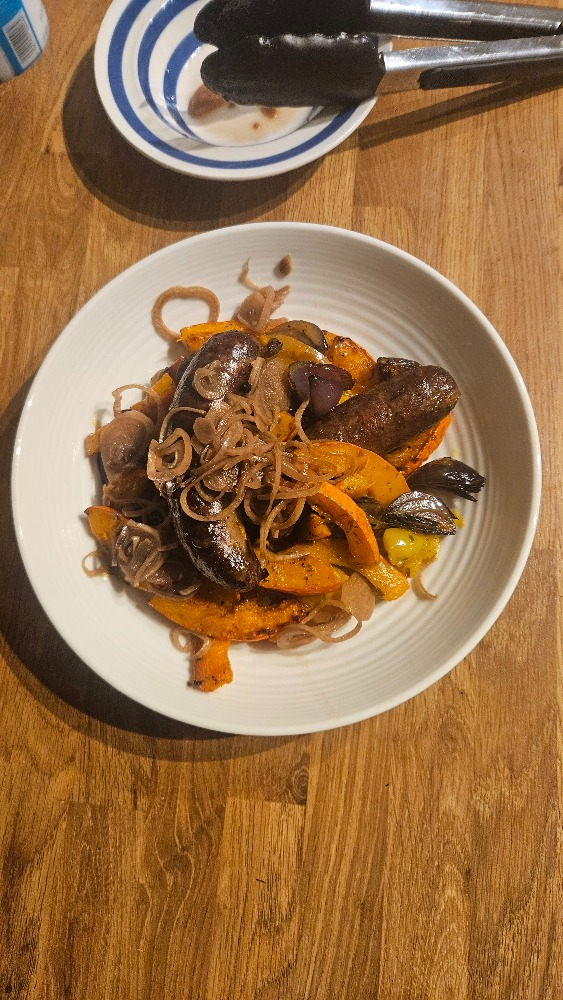
Anyway, I think The Meat Paradox presents a good argument for eating a very modest amount of meat, partly for our physical health and partly because, not to put too fine a point on it, you need a certain amount of manure if you are to farm organically at scale. And in any case one of my favourites growing up was sausages, potato wedges, garlic, rosemary and apples all thrown together in one tray. I secretly preferred it in the oven, where all the flavours would mesh together into a kind of gravy for dipping the potatoes in, and I still choose to cook that comfort dish myself and sometimes even specifically ask for it when I visit. This is an updated version of my mum’s recipe with seasonal flavours, using a lesser-known variety of squash grown on the nearby Baddaford Farm and tragically underutilised venison.
Sausages are an affordable and convenient way to enjoy this highly sustainable and low-fat protein. Deer need very little intervention, unlike intensively farmed meat which is loaded with antibiotics, hormones and other chemicals. The meat is packed with essential amino acids and vital minerals from their varied diet – I wrote a little about pasture-raised cattle in Estonia a couple of weeks ago. Due to a lack of predators, deer often need to be culled to keep the wider ecosystem healthy so the forest can store more carbon without being eaten, but are often left to waste. If we are to eat meat very occasionally, wild proteins are one of the most sustainable and in many ways ethical option. (Belgrade University, 2025)
Kabocha squash & venison sausages (serves 2)
This is a spectacularly colourful dish, full of flavour and seasonal charm. It’s a deceptively impressive number to pull out for date night: looks the part and takes all of half an hour start to finish, so you don’t have to spend all night in the kitchen. If you want to make the meat go a bit further, double the veg and add a tin of drained black or cannellini beans at the same time as the honey mustard glaze.
- 1 squash, any kind, deseeded, quartered and cut into 0.5cm slices (no need to peel)
- 2 red onions, cut into thin wedges
- 2 apples, skins left on, cut into 1.5cm slices
- 4 tbsp olive oil
- 4 venison sausages
- 1 tbsp clear honey
- 2 tsp English mustard
- Large handful of tarragon or mint, finely chopped
Preheat the oven to 200ºC and place a large baking tray on the top rack. In a large bowl, combine the squash, onion, apples and 2 tbsp oil. Season and toss until well coated. Carefully arrange everything over the preheated baking tray, then nestle in the sausages and roast for 10 minutes. Meanwhile, make the dressing. Whisk together the honey, mustard and tarragon and remaining 2 tbsp oil, then season and set aside. Remove the baking tray from the oven, using tongs to toss the vegetables and flip the sausages over, then add the dressing and the beans, if using, then grill for 10 more minutes, until the vegetables are golden and tender, and the sausages are a deep golden-brown. Divide everything between 2 warmed plates and serve immediately. I like to serve this with some pickled shallots or red onion for an extra pop of festive pink colour.