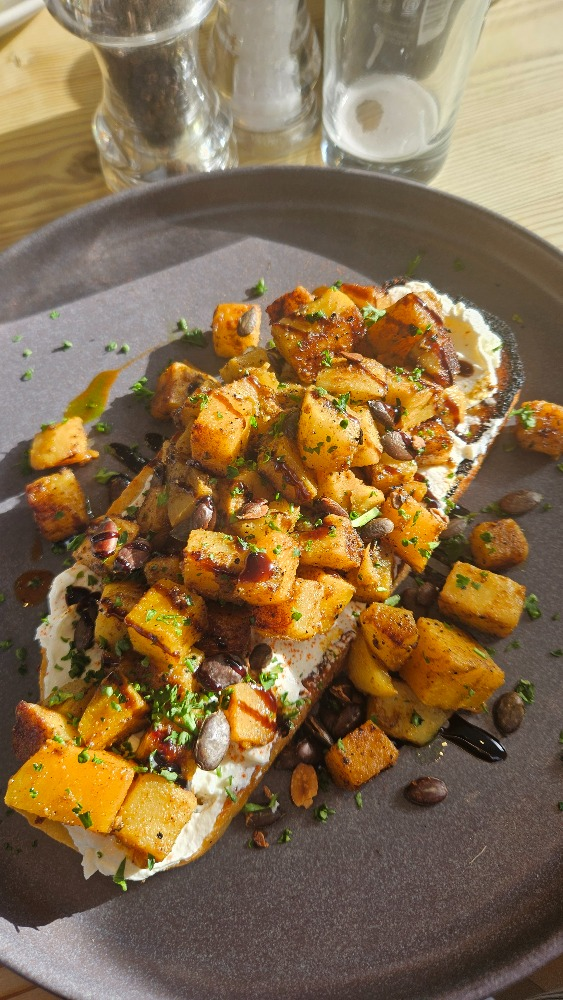
Musabaha is the original, more rustic, hummus – a protein-packed, creamy spread then becomes a heavyweight of the brunch table when combined with a good, crusty sourdough. Inspired by Beans Is How, an SDG2 campaign to double global bean consumption, I’m taking up the #BeansOnTheMenu challenge and adapting one meal every day to include a portion of legumes and pulses.
10th February – World Lentil Day
Put it in the diary. A few interesting things about beans before we go to the recipe:
- Diets that are too low in legumes are associated with 9000 early deaths in the UK each year.
- A portion of beans contains 100% more fibre than a chicken breast, helping to protect against digestive cancers, and 250% more fibre than two slices of white bread – plus they taste less sad too.
- On average, beans cost 4.5 times less than other plant-based proteins, and an even bigger difference when compared to meat and dairy products.
- On average we eat about 1 portion of beans per week, and two-thirds of us eat less than that. In order to meet the planetary health diet established in the EAT-Lancet report (check out the Socialist Chef Manifesto here) UK bean consumption would need to be 7 times higher.
- Asian and Asian British citizens on average eat twice as much beans as those identifying as White British, which is why I go on a lot about learning from other cultures.
- The UK grows about 800,000 tonnes of beans per year, but most of this is exported for animal feed. What’s wrong with grass? It’s free, it just grows on the ground everywhere. Somewhat counter-intuitively, we then import another 500,000 tonnes of beans back into the UK, with UK growers missing out on a potential earning of £586 million.
(The Food Foundation, 2025)
Musabaha toast, winter roots (serves 4)
Don’t be shy with the olive oil here. Olive trees, being perennial crops, sequester carbon, help prevent soil erosion with their deep roots and slow desertification in the arid regions where they’re grown, such as Palestine and the DAANES. The Democratic Autonomous Administration of North-East Syria is an example of drought-resistance techniques and political resistance to industrial and financial interests driving control of the land appearing side-by-side. Here, in a territory mostly made up of settlements liberated from the Islamic State, the Kurdish freedom movement is attempting to put Murray Bookchin’s Radical Agriculture into practice.
It’s a much too complicated situation to go into here, but if you’re interested, Stephen Hunt’s We Must Begin With the Land is a great place to start.
Anyway, olive oil is rich in monounsaturated fats like oleic acid, reducing inflammation and oxidative stress. A 2018 review found that diets high in olive oil helped promote weight loss more than those low in olive oil. I used a gently peppery, warm and grassy oil from Palestine’s West Bank: Zaytoun supports Palestinian farming communities facing the challenges of illegal Israeli occupation and settlement through trade. I think it’s another great example of the difference we can make to people and communities by exploring the origins of our imported foods.
- 200g mixed dried pulses – red and brown lentils, British fava beans and Carlin peas, even black beans or cannelini beans are great.
- 125g tahini
- 2 garlic cloves
- 1/2 of an onion, roughly chopped
- 1 bay leaf
- Extra-virgin olive oil
- Juice of 1 lemon
- Pinch of sumac
Soak the pulses overnight. In the morning, drain and cover the pulses with fresh water. Add the garlic, onion and bay leaf and simmer until the pulses are very soft. Drain, reserving the cooking water for meringues, ice cream and mayonnaises, and set aside about half of the pulses. Blitz the other half with a hand blender or potato masher, adding some of the cooking water, olive oil and lemon juice to form a loose puree with the consistency of guacamole. Season well with salt and a pinch of sumac, if you have it, and stir the whole pulses through the puree. The musabaha is incredibly versatile and will keep in the fridge for up to 4 days, perfect for a speedy snack or light lunch.
- 800g mixed wintery vegetables – I used orangey ones like swede, carrots and different varieties of squash but you could easily throw in some beetroot, parsnips or turnips. Using a mixture of vegetables of different varieties helps support biodiversity and increases the range of plants in your diet. Orange veg is a great source of beta-carotene, an essential immune-booster during the cold months. It also has interesting anti-carcinogenic properties (remember we talked about imazalil last week? Catch up here if you missed it) and a strange ability to clean up cancer-causing free radicals from the body.
- Extra-virgin olive oil
- A pinch of fresh thyme or oregano leaves
- 1tsp smoked paprika
- 1tsp chilli flakes
Dice the vegetables into 2cm cubes. Toss with the olive oil and herbs with a pinch of salt and roast for 20 minutes. Add the spices and toss together, then roast for another 15-20 minutes until tender. Serve hot from the oven, or reheat in a frying pan.
Spread the musabaha over 4 slices of sourdough toast and top with the roasted vegetables. Finish with a pinch of mixed toasted seeds – I use 1/2tbsp each of hemp, flax, pumpkin and sunflower seeds fried together with 1tsp soy sauce.